


TOBACCO and SLAVERY in COLONIAL VIRGINIA
PART II
BACON’S REBELLION
A sudden breakdown of law and order in Jamestown deeply alarmed William Sherwood. As a wealthy planter and a member of Virginia’s House of Burgesses, he felt compelled to file a report to the King’s Privy Council in London. Sherwood blamed the violence on a previously unknown rebel leader named Nathaniel Bacon and a “rabble” composed of “a good number of indigent and dissatisfied persons.”
As an established landowner, Sherwood opposed policies that would favor the interests of former indentured servants. He feared that Bacon and his followers would enact “their own laws” and upend Virginia’s existing social order.
Frustrated small farmers
Sherwood and other wealthy planters had legitimate reasons to be worried about rebellious former indentured servants. Once they earned their freedom, indentured servants became independent small farmers. But falling tobacco prices, rising taxes, and dwindling opportunities to purchase fertile land along navigable streams left them feeling frustrated and embittered.
The long list of grievances fueled a growing anger directed at Virginia Governor William Berkeley and wealthy planters like William Sherwood. For example, Berkeley used his annual 1,000-pound salary to finance the construction of a magnificent plantation filled with expensive imported furniture. His lavish lifestyle callously ignored impoverished indentured servants who lived in humble cabins while spending four years of their working lives to pay the 6-pound cost of a transatlantic voyage from London to Virginia.
Bacon’s Rebellion
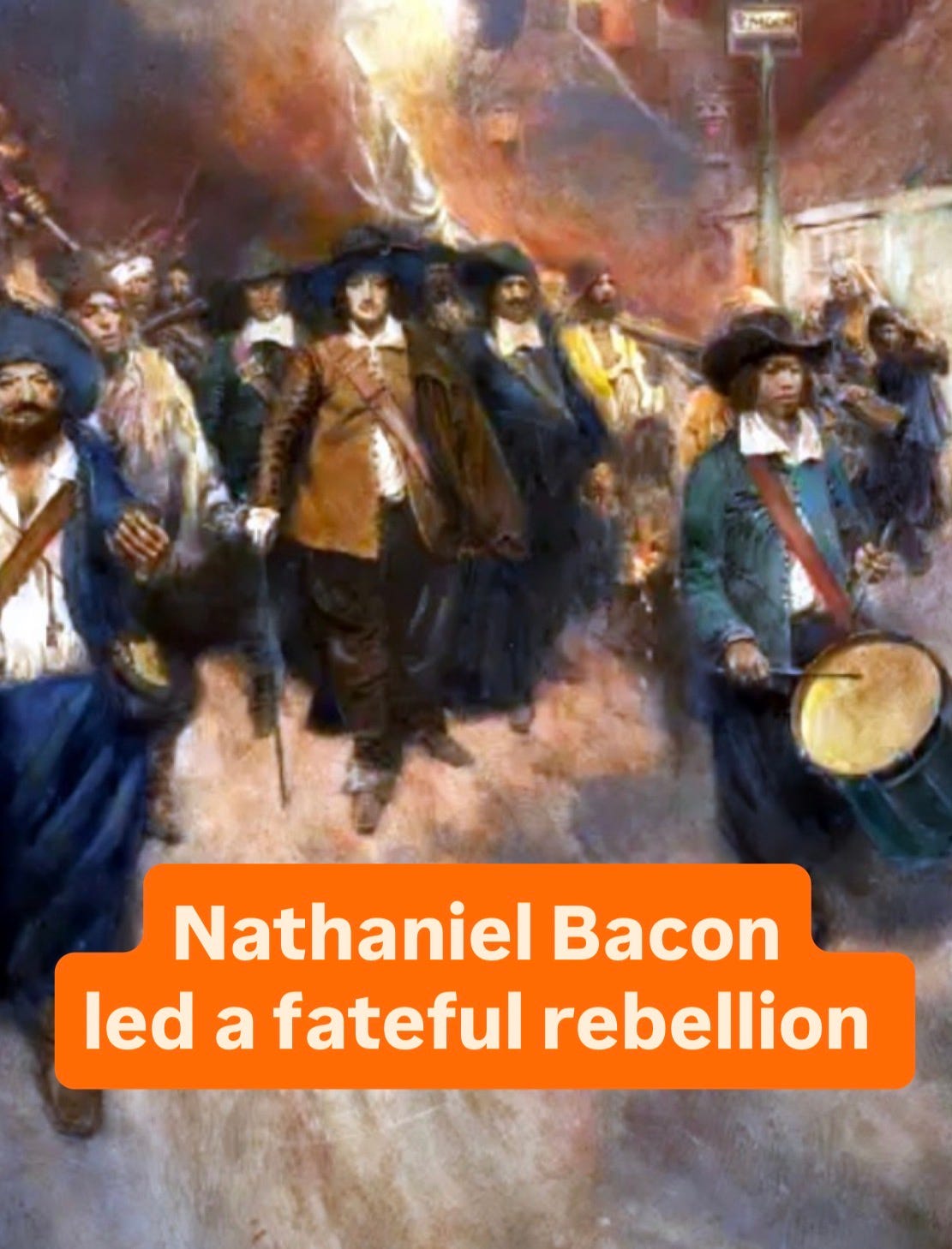
In the spring of 1676, Nathaniel Bacon took advantage of popular discontent to lead a rebellion against Governor Berkeley. The painting introducing this post depicts Bacon leading his followers into Jamestown. When Berkeley rejected Bacon’s demands for lower taxes and more aggressive political reforms, Bacon and 600-armed followers burned down Jamestown and then destroyed 1.5 million pounds of tobacco.
Known as Bacon’s Rebellion, the insurrection unexpectedly ended when Bacon suddenly died from dysentery. His death demoralized the leaderless rebels and enabled Governor Berkeley to crush the uprising. The vindictive governor then executed 23 of the “outlaws.”
Fateful consequences
Although Bacon’s Rebellion proved to be brief, it had enduring and fateful consequences. The sudden burst of violence exposed long-simmering tensions between the wealthy planters and their struggling former indentured servants.
Bacon’s Rebellion persuaded frightened planters to begin replacing unruly and potentially violent indentured servants with more easily controlled slaves imported from Africa. Bacon’s Rebellion thus marked the beginning of the fateful process of creating a permanent enslaved African labor force.
So why should you remember Bacon’s Rebellion? APUSH test writers expect students to have a firm understanding of the origins of slavery in Virginia. Bacon’s Rebellion marked the beginning of a pivotal shift in Virginia’s labor force and social structure.