


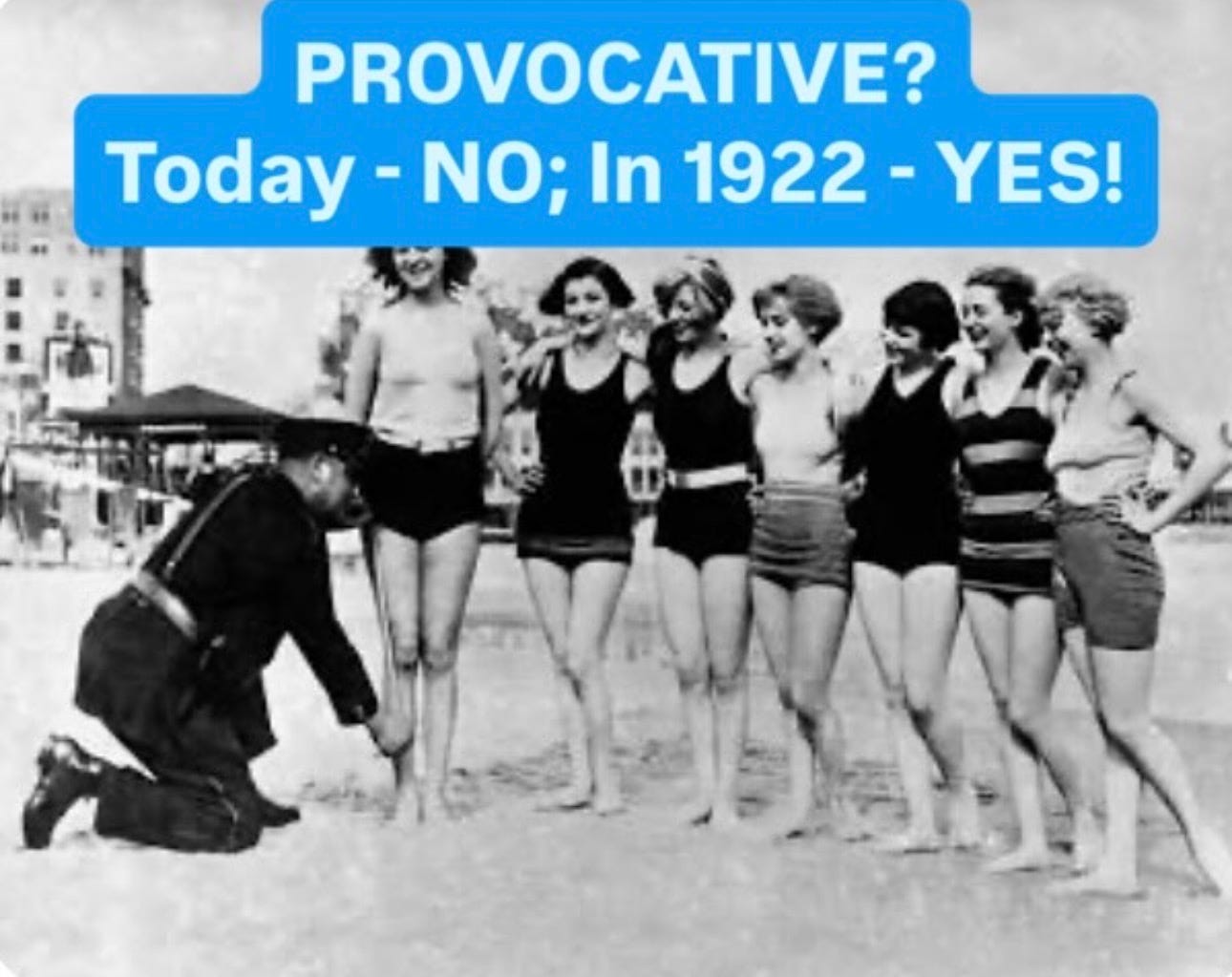
Back in 1922, flamboyant young women called flappers challenged conventional norms of feminine behavior. They wore short skirts, danced the Charleston, and as you can see in today’s picture even dared to wear skimpy one-piece swimming suits on the beach! Outraged by their deliberately PROVOCATIVE violation of conventional standards, a local official is measuring the lengths of their suits. Today this notion of a PROVOCATIVE bathing suit would seem absurd and even comical.
The example of the flapper’s bathing suits illustrates that it is possible for a behavior to be seen as PROVOCATIVE at one time and relatively harmless years later. Literary history contains many examples of this phenomenon. For example, we now see Lewis Carroll’s Alice’s Adventures in Wonderland as an imaginative children’s story. But when it first appeared in 1865, the novel’s nonsensical violence and theme of betrayal seemed PROVOCATIVE to many outraged Victorian era readers.
PROVOCATIVE – something that provokes or causes a strong reaction