


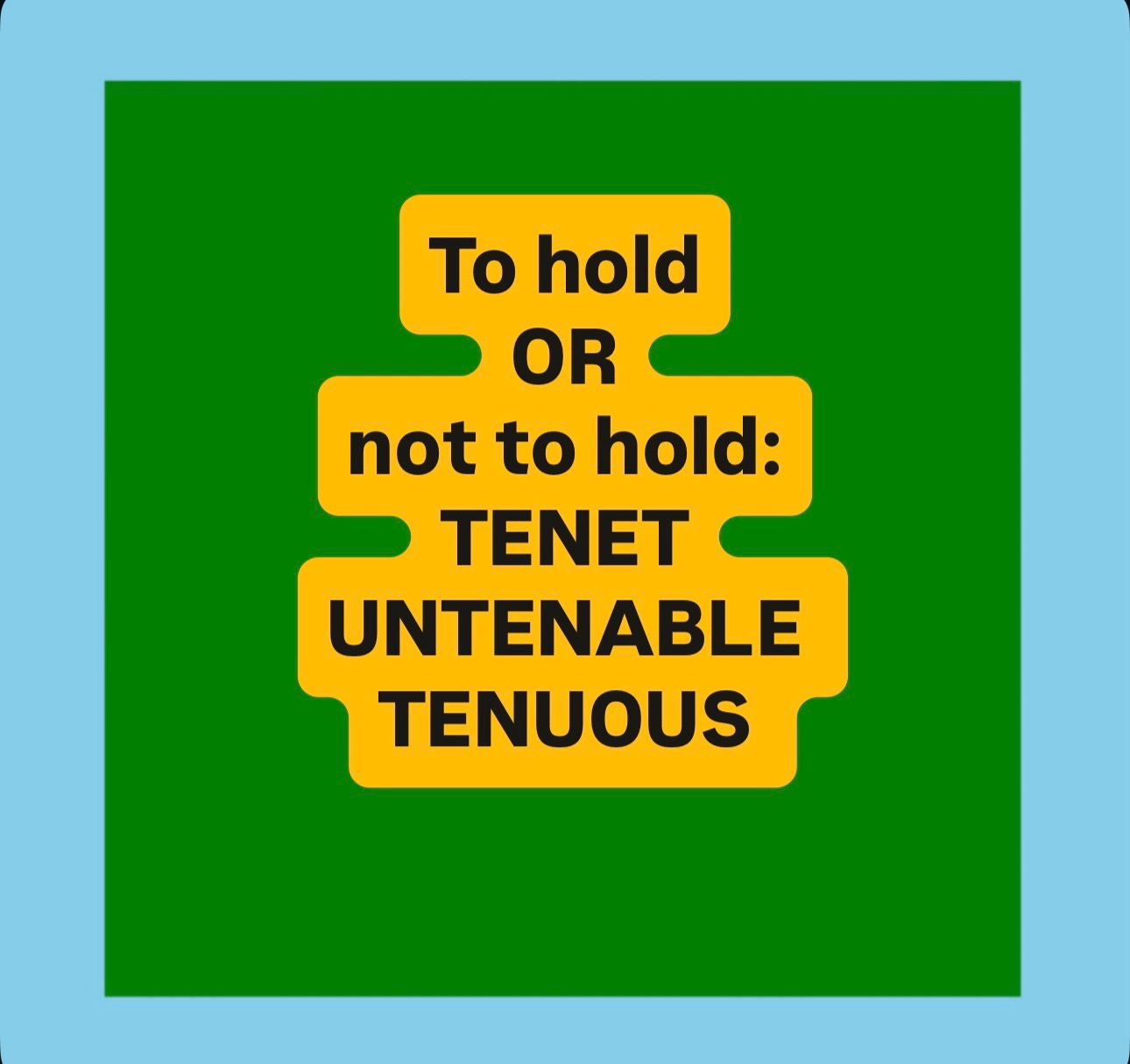
The Latin verb tenere means “to hold or grasp.” Tenere has emerged as the single most important Latin root on recent SAT vocabulary in context questions. Here are three examples:
Let’s begin with TENET. A TENET is a firmly held principle or belief. For example, the naturalist John Muir was a central figure in the early American conservation movement. A core TENET of his philosophy was the belief that nature possessed an intrinsic value independent of its usefulness to human industry. This TENET guided his successful efforts to establish Yosemite National Park and protect wilderness areas from commercial development.
Now let’s move on to UNTENABLE. An UNTENABLE idea cannot be held. For example, basking sharks have traditionally been classified as ectothermic or cold-blooded fish. However, marine biologist Haley R. Dalton discovered that this long-held belief is UNTENABLE because basking sharks are really endothermic!
Let’s conclude our vocabulary tour of the tenere root family with TENUOUS. A TENUOUS idea is very weakly held. For example, do you remember the War of 1812? Probably not! It occupies a TENUOUS place in historic memories in both Great Britain and America.
BONUS POINTS! Mr. Chmiel is using Winning Words to AUGMENT the vocabularies of his FJCA students. He reports that his students “will, of course, be CIRCUMSPECT about choosing the word PROTRACT when answering vocabulary in context questions.” He is confident the FJCA students will PREVAIL when they take the School Days SAT on April 21st. GOOOOO FJCA students!!!!
TENET - a firmly held belief; axiom
UNTENABLE - impossible to hold or defend
TENUOUS - weakly held; insecure